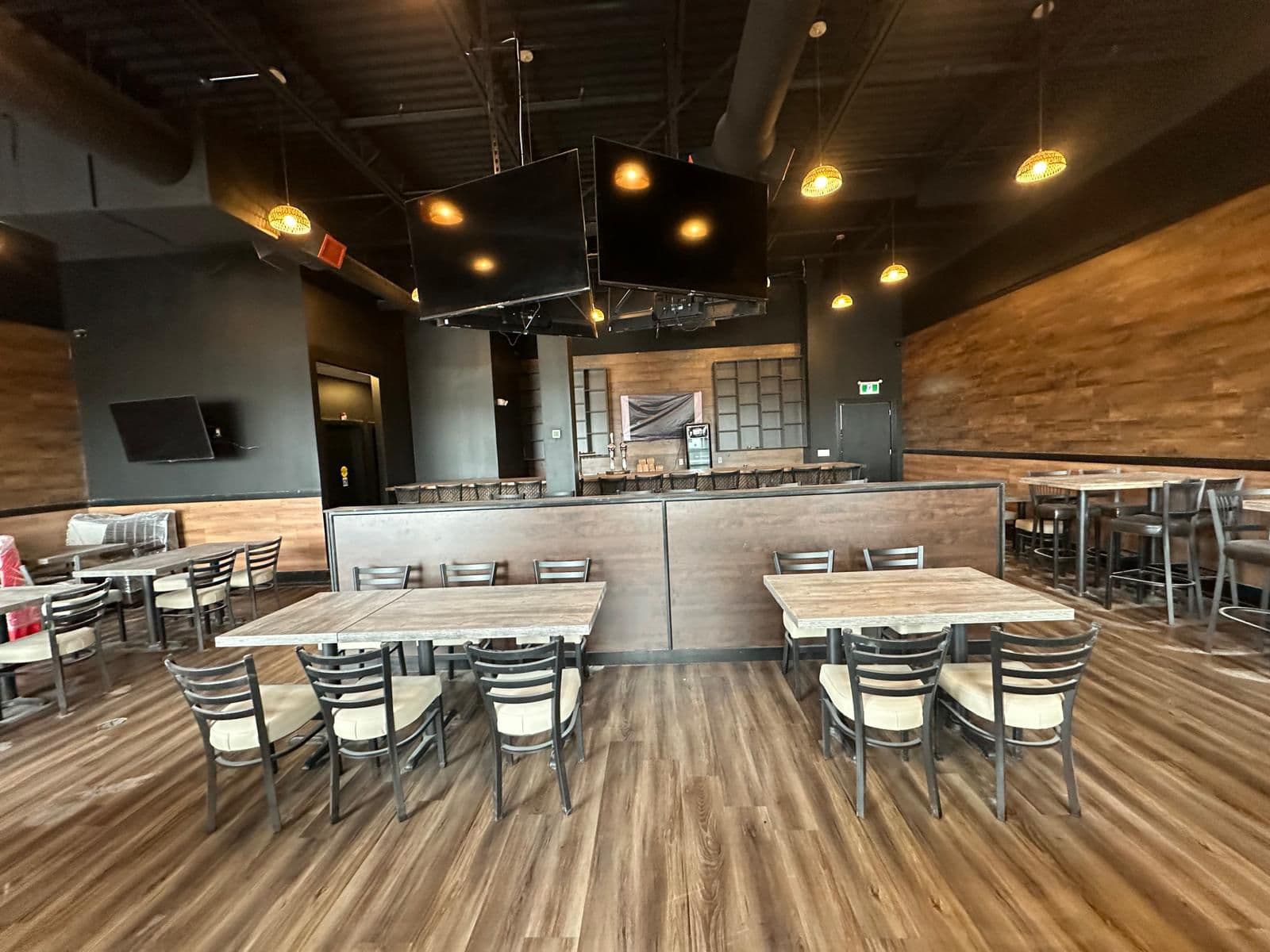
Choosing between luxury vinyl plank (LVP) and hardwood depends on what the room needs, not on one material being universally better. LVP generally suits homeowners who prioritize moisture resistance, simpler maintenance, and predictable upkeep. Hardwood often fits those who value natural material, traditional character, and the option to refinish the surface over time.
For an Edmonton renovation, consider moisture exposure, room use, appearance, existing flooring, and subfloor condition before deciding. Installation scope matters too, especially when removal, preparation, transitions, trim, or stairs are involved.
Quick summary

- Choose LVP when practical upkeep, moisture resistance, and consistent styling are priorities.
- Choose hardwood when natural character, a traditional appearance, and refinishing potential matter most.
- For basements, kitchens, entry areas, rentals, and commercial spaces, assess moisture and wear before focusing on appearance.
- Request an itemized estimate covering material, removal, subfloor preparation, installation, trim, transitions, and cleanup.
LVP vs hardwood at a glance
This comparison is a starting point. Products vary by construction, finish, thickness, installation method, and manufacturer requirements.
| Criterion | LVP | Hardwood |
|---|---|---|
| Material | Manufactured planks available in many wood-look colours, textures, and patterns. | Natural wood with distinctive grain, colour variation, and character. |
| Moisture | Often practical where moisture resistance is important, subject to product specifications and site conditions. | Requires careful consideration in areas exposed to moisture or changing conditions. |
| Maintenance | Appeals to households seeking straightforward routine cleaning. | Needs care suited to the wood species, finish, and exposure. |
| Repairs | Damaged planks may be replaceable, although matching and access can affect the repair. | Some damage may be repaired or addressed through refinishing, depending on the floor and damage. |
| Appearance | Provides design consistency and a broad range of wood-look styles. | Provides the variation and depth associated with natural wood. |
| Installation | Still requires a suitable subfloor, accurate layout, and attention to transitions and trim. | May be more sensitive to subfloor conditions, room conditions, and installation requirements. |
Moisture exposure and room suitability

Moisture should be one of the first questions in a flooring comparison. A beautiful sample can still be a poor match if spills, dampness, cleaning routines, or site conditions are overlooked.
Basements and lower-level rooms
LVP is often considered for finished basements because moisture resistance and easier maintenance may be priorities. The product specifications, concrete or subfloor condition, and any moisture concerns still need to be reviewed. LVP does not eliminate the need to address an unsuitable or damp installation surface.
Hardwood can create a warm, traditional appearance, but it deserves closer evaluation in a lower-level space. If the basement environment or subfloor is unsuitable, the material choice may need to change before work begins.
Kitchens and entry areas
Kitchens and entry areas experience spills, tracked-in debris, frequent cleaning, and concentrated traffic. LVP may suit homeowners who want a practical surface for these conditions, provided the product and installation method are appropriate.
Hardwood can work in these areas when the household is prepared to manage spills and follow the care requirements for the specific floor. The decision should reflect how the room is used, not appearance alone.
Living rooms, bedrooms, rentals, and commercial spaces
Living rooms and bedrooms usually offer more flexibility. Hardwood may appeal where natural grain and a traditional finish matter, while LVP may be preferable when consistent styling or simpler upkeep is the priority.
For rentals, offices, and retail spaces, consider cleaning routines, occupant turnover, furniture movement, traffic, and future maintenance access. LVP may suit spaces where practical upkeep and consistent replacement matter. Hardwood may fit interiors where natural character is central to the design.
Durability, maintenance, and repairs
Neither material is maintenance-free or immune to damage. Grit, furniture, moisture, impact, cleaning methods, and everyday traffic all influence how a floor looks and performs.
LVP generally appeals to people seeking straightforward cleaning and a surface selected for moisture resistance. Ask which cleaning products the manufacturer recommends, how damaged planks can be replaced, and whether matching material should be kept for future repairs.
Hardwood requires attention to its finish and exposure to spills, grit, and scratches. Its potential for repair or refinishing can matter to some homeowners, but not every damaged floor can be restored in the same way. Wood type, plank construction, finish, and damage depth all matter.
Appearance, comfort, and long-term preferences
LVP offers a controlled range of wood-look colours, patterns, and textures. It can help create visual continuity between connected rooms. Review samples in the home’s actual lighting because colour and texture may differ from showroom or online views.
Hardwood brings natural variation through grain, knots, colour differences, and finish. Some homeowners prefer that individuality, while others want the more predictable appearance of a manufactured plank.
Comfort depends on the flooring, subfloor, underlayment where applicable, room temperature, and installation details. Ask the contractor to explain the proposed assembly rather than assuming one material will always feel warmer or softer.
Installation scope: what can change the project
Material selection is only one part of the flooring project. Confirm whether the estimate includes:
- Removal and disposal of existing flooring, adhesive, underlay, or damaged material.
- Subfloor inspection, levelling, patching, or replacement.
- Assessment of moisture concerns or conditions affecting installation.
- Floor-height changes between the new material and adjoining rooms.
- Transitions at doorways, stairs, room boundaries, and flooring changes.
- Removal, replacement, or adjustment of baseboards and other trim.
- Furniture handling, appliance movement, surface protection, and cleanup.
- Layout work around cabinets, islands, closets, or unusual room shapes.
A replacement can look simple until old flooring is removed and the subfloor is visible. An itemized estimate helps separate material cost from the preparation and finishing work required for a proper installation.
Which option fits common Edmonton renovation projects?
Basement finishing
LVP is often a practical starting point when easier upkeep and moisture-related considerations lead the decision. Confirm product requirements and site conditions first. Hardwood may be considered when the space is suitable and natural appearance is the priority.
Kitchen renovation
LVP may fit kitchens where spills, cleaning, and daily activity are central concerns. Hardwood can suit a natural-material design, provided the household accepts its care requirements. Coordinate either choice with cabinets, appliances, islands, and transitions.
Main-floor living areas
Hardwood often appeals where natural character and a traditional finish matter. LVP can make sense when consistent styling or simpler maintenance is more important. Check room-to-room continuity and floor height before ordering.
Rental, office, and retail upgrades
Base the choice on traffic, cleaning, design requirements, and future repair access. LVP may suit practical, frequently used spaces. Hardwood may suit a commercial interior where natural appearance is part of the desired environment.
Questions to ask before requesting a flooring estimate
- Which LVP or hardwood products suit this room, and what specifications should I review?
- What condition is the subfloor in, and what preparation is included?
- Are moisture concerns, uneven areas, or damaged sections included in the assessment?
- Does the estimate include removal and disposal?
- How will the new floor meet tile, carpet, stairs, cabinets, and adjoining rooms?
- Are baseboards, trim, and transitions included or priced separately?
- What installation method is proposed, and what conditions does it require?
- What cleanup is included?
- Which warranty responsibilities belong to the manufacturer and which belong to the installer?
- Does the estimate separate materials, preparation, installation, additional work, and taxes?
A simple decision process
- Identify room conditions. Note moisture, traffic, cleaning habits, furniture, pets, and adjoining rooms.
- Rank priorities. Decide whether upkeep, natural character, consistency, repairability, or refinishing matters most.
- Check constraints. Review the subfloor, existing flooring, floor heights, trim, stairs, transitions, and access.
- Compare complete scopes. Include preparation, removal, installation, finishing details, and cleanup, not just material prices.
- Confirm the choice. Ask an installer how the selected material suits the specific room and what the estimate includes.
Frequently asked questions
Is LVP or hardwood better for a finished basement?
LVP is often the practical starting point when moisture resistance and easy upkeep matter. The final choice depends on the product, subfloor, and basement conditions.
Can LVP and hardwood be used together?
Yes. They can be used in different rooms when design, floor heights, and transitions are coordinated.
Does existing flooring need to be removed?
Not always. The answer depends on the existing material, its condition, floor height, installation method, and the new product’s requirements.
How do transitions and trim affect installation?
Transitions manage changes between materials or floor heights, while trim finishes the perimeter. Both affect appearance and project scope, especially at doorways, stairs, and cabinets.
Conclusion: choose the flooring that matches the room
LVP is often the stronger fit when moisture resistance, straightforward maintenance, and predictable everyday use lead the decision. Hardwood is often better when natural material, traditional character, and refinishing potential matter most.
For an Edmonton renovation, request a complete scope rather than comparing material prices alone. SSJ Construction & Renovations provides flooring installation and residential and commercial renovation services in Edmonton and surrounding areas, with an emphasis on clear communication and transparent pricing. Visit SSJ Construction & Renovations to request an estimate.